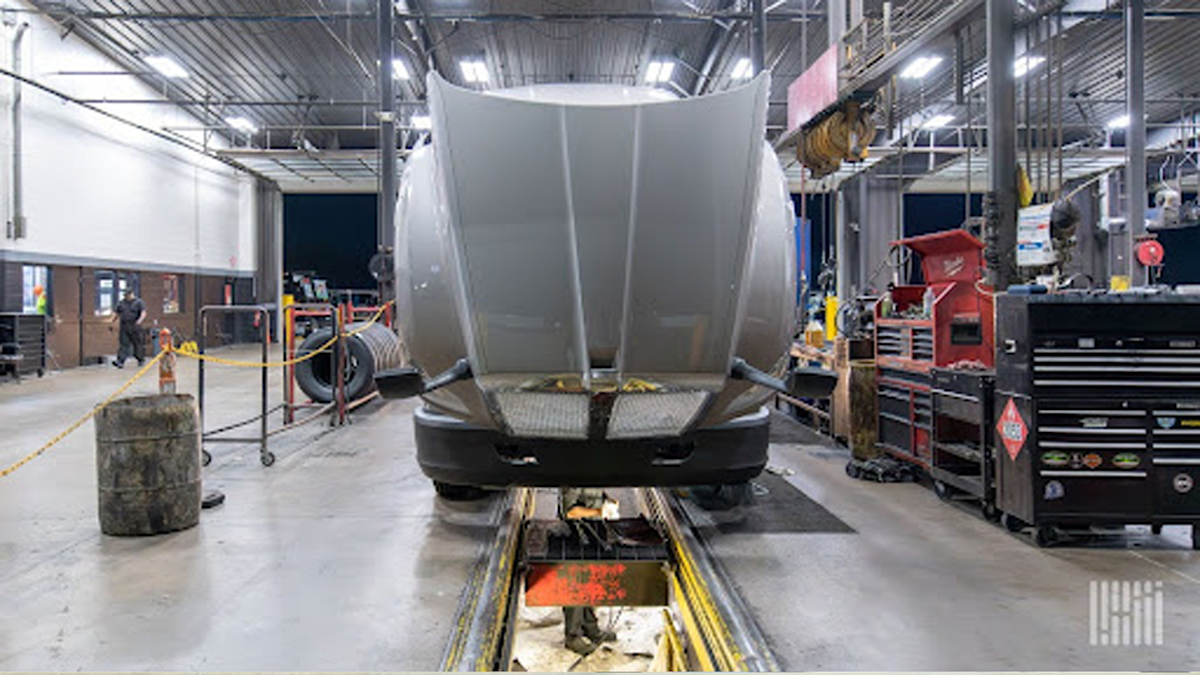
Some trucks are just cursed. That’s just the fact. Used trucks are especially a dice roll.
You know the one — every time it goes in for a PM, something new gets discovered. Transmission slipping. Electrical gremlins. DPF acting up. And as soon as you think you’re back on the road making money, bam—check engine light, again. That truck starts costing you more than it’s paying you, and before long, it’s not a tool for profit anymore — it’s a liability.
If you’re an owner-operator dealing with a truck that refuses to stay out of the shop, it’s time to have a real, honest conversation with yourself — not just about the truck, but about your future in the game.
Let’s get into it.
Let’s start with a real-world scenario:
You’re under a load. You just picked up 42,000 pounds of paper rolls out of Kentucky headed to South Carolina. Delivery is set for tomorrow morning.
About 90 miles into the trip, you feel it — engine stutter, power loss, and a sudden warning about fuel pressure. You limp it to the shoulder, get a tow, and now you’re at a shop. The mechanic says it’s likely an injector harness or fuel rail problem, but they won’t know until tomorrow. Parts are backordered. Maybe they’ll be in next week.
The broker’s blowing up your phone. You’ve already lost the load. And now you’re losing revenue — again.
This isn’t your first rodeo with this truck either. In the last three months alone, you’ve replaced:
-
The turbo
-
Two injectors
-
The EGR cooler
-
And the DEF pump (twice)
All told, you’ve spent $17,000 YTD on repairs — and it’s only September.
This is where the road forks. And your next move can determine if you keep running this business… or if the business runs over you.
Let’s break down the decision tree in real terms.
Some drivers get emotionally attached to their trucks — especially if it’s paid off. They say, “Well, I don’t have a payment, so it’s worth fixing.”
But here’s the brutal truth: a paid-off truck is only an asset if it’s moving. If it’s sitting in a bay, waiting on backordered parts, it’s nothing but a debt magnet.
-
No monthly finance payment
-
You know the truck’s history
-
Repairs may eventually stabilize (key word: may)
-
Unreliable equipment = lost revenue
-
Escalating repair costs
-
Damaged reputation with brokers or direct shippers
-
Constant stress and unpredictability
If you go this route, at least put a structure around it. Create a repair threshold — for example, “If the next repair exceeds $X or it breaks down within Y days of the last fix, it’s done.”
And if you’re not already using maintenance tracking software or an Excel log to monitor frequency and cost, start immediately. Emotion has no place in this decision — the numbers will tell the truth.
Sometimes the smartest move is to dump the truck before it becomes worthless. If you’ve recently done major repairs (new turbo, new emissions components), that can actually help your resale value.
You might not get top dollar, but waiting too long often means selling a broken truck for parts.
-
Be honest about repairs, but highlight what’s been replaced
-
Clean it up — nobody wants to buy a headache that looks like one
-
Sell privately before auctioning if time allows
Use the proceeds as a down payment on a more reliable truck or to retool your business entirely.
Let’s say the truck was your second or third unit, and your other trucks are still profitable. Now’s the time to reassess your fleet strategy. If this unit is dragging down your operation, let it go. You’re not quitting — you’re protecting the core.
If it’s your only truck and your operating capital is dried up? Then this might be your stop — for now.
And that’s not failure. That’s strategy.
Step back, regroup, and come back stronger later. Or pivot into a different lane — dispatching, brokerage, or even a company driver role while you rebuild capital.
If you’re still making payments on a unit, ask your lender or insurer about downtime protection. It’s not perfect, but a few hundred bucks back per day can ease the blow.
Q: It’s a 2016 and has 780K miles. Should I overhaul the engine or replace the truck?
A: At that mileage, you’re likely nearing emissions component life limits and engine wear. If you overhaul the engine but skip emissions, you’re not solving the bigger picture. At that point, replacement may be more cost-effective long-term.
Q: I’m halfway through a lease. What are my options?
A: Check your lease language for early termination or substitution clauses. In some cases, you can swap units or negotiate a trade-in if it’s truly a lemon.
Q: What if the truck breaks down under a load and the repair ETA is unknown?
A: Communicate with the broker immediately. Offer to reassign the load (if you have other units), or ask if they’ll dispatch a repower. Get it in writing that the breakdown was equipment-related to protect your score.
Q: How do I explain this to a broker or shipper without damaging my reputation?
A: Honesty paired with transparency. “We had a mechanical issue, we’re securing alternative equipment and will keep you posted every step of the way.” Then follow up — don’t ghost them. A bad update is better than no update.
Every carrier hits this crossroad at some point — the moment when a truck you once trusted becomes your biggest liability.
When that time comes, don’t let pride or nostalgia cloud your judgment. Look at the repair logs. Look at the lost revenue. And ask the question nobody wants to face: Is this truck costing me more than it’s worth?
It might be time to cut your losses.
That doesn’t mean you failed. That means you’re thinking like a business owner — not just a driver behind the wheel.
Some trucks aren’t meant to make it to a million miles. And that’s okay. The real test is what you do next.
The post When the Wheels Stop Turning – What to Do With a Truck That Won’t Stay Out of the Shop appeared first on FreightWaves.