

What Big Oil wants in Venezuela
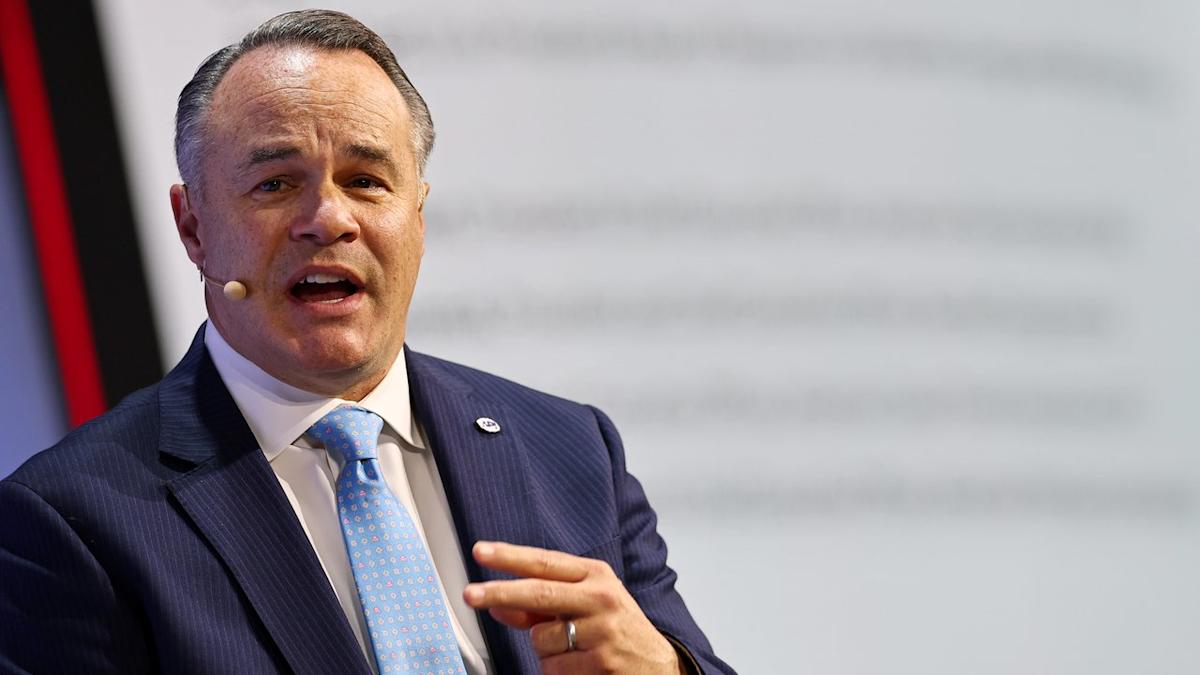
WASHINGTON — American Petroleum Institute President Mike Sommers laid out the next 10 years of U.S. oil as a “demand decade” that oil companies are equipped to meet. The continuing U.S. intervention in Venezuela may have complicated that pristine image.
U.S. energy executives, policymakers, and other experts gathered at the annual API energy summit in Washington to assess the state of the petroleum sector. The U.S. is a net oil exporter, producing nearly 14 million barrels per day at a rate that’s kept climbing in recent years.
Sommers began his address by identifying goals that he argued will be key for U.S. oil companies as they mull restarting operations in Venezuela, a South American country with the largest global oil reserves.
“Turning reserves into sustained production — whether in Venezuela or anywhere else — requires more than expertise and geology,” Sommers said in his keynote address at API’s annual summit on Tuesday morning. “It requires stable governance, rule of law, operational security, physical safety, and long-term investment certainty.”
That echoes what Western oil chief executives relayed to the White House late last week. In the televised part of the gathering with President Donald Trump, most oil CEOs expressed a reluctance to kick off a spending binge to revive Venezuela’s decrepit oil sector. Falling oil prices are contributing to a chill in enthusiasm.
“Since the President’s decision to apprehend Nicolás Maduro, I think we’ve seen private conversations, the meeting at the White House — the administration has had to learn you don’t go into Venezuela, turn a tap, and [have] three million barrels of a flow,” said Bob McNally, the president of Rapidan Energy Group. “It doesn’t happen like that.”
McNally said oil chiefs were relaying their candid views to the Trump administration — more often in private than public.
“The industry is speaking that truth to the administration. And listen to Secretary [Chris] Wright and [Secretary] Marco Rubio, Secretary [Scott] Bessent, I think it’s sinking in,” McNally said. “President Trump wants to go faster, but we’re closing that expectations gap.”
In recent days, Wright has suggested it’s possible for the U.S. government to take a stake in the Venezuelan oil sector, chiefly the state-owned firm Petroleos de Venezuela (PDVSA), to rev its production. Currently, Venezuela produces roughly 900,000 barrels per day, a smaller amount than North Dakota.
“We’d have to know a little bit more about what the administration is proposing in terms of a stake in PDVSA,” Sommers told Quartz. “But we’re not for the nationalization of oil companies or for there to be a national oil company in the United States.”