The Federal Reserve is expected to cut interest rates. How low will it go?
After nine months of holding its key interest rate steady, the Federal Reserve is widely expected to announce a rate cut after its two-day September meeting.
The central bank’s decision, to be announced Sept. 17, follows months of President Donald Trump browbeating Fed Chair Jerome Powell for lower rates. While Trump’s name-calling failed to sway the Fed, a string of disappointing job market reports may have been enough to finally do the trick.
“The fourth month of sub-par employment performance signals a dramatic stall in hiring and fully supports the Fed starting rate cuts at the next meeting,” Nationwide Chief Economist Kathy Bostjancic said in a Sept. 5 note.
The “real question now,” she said, is how many rate cuts will follow.
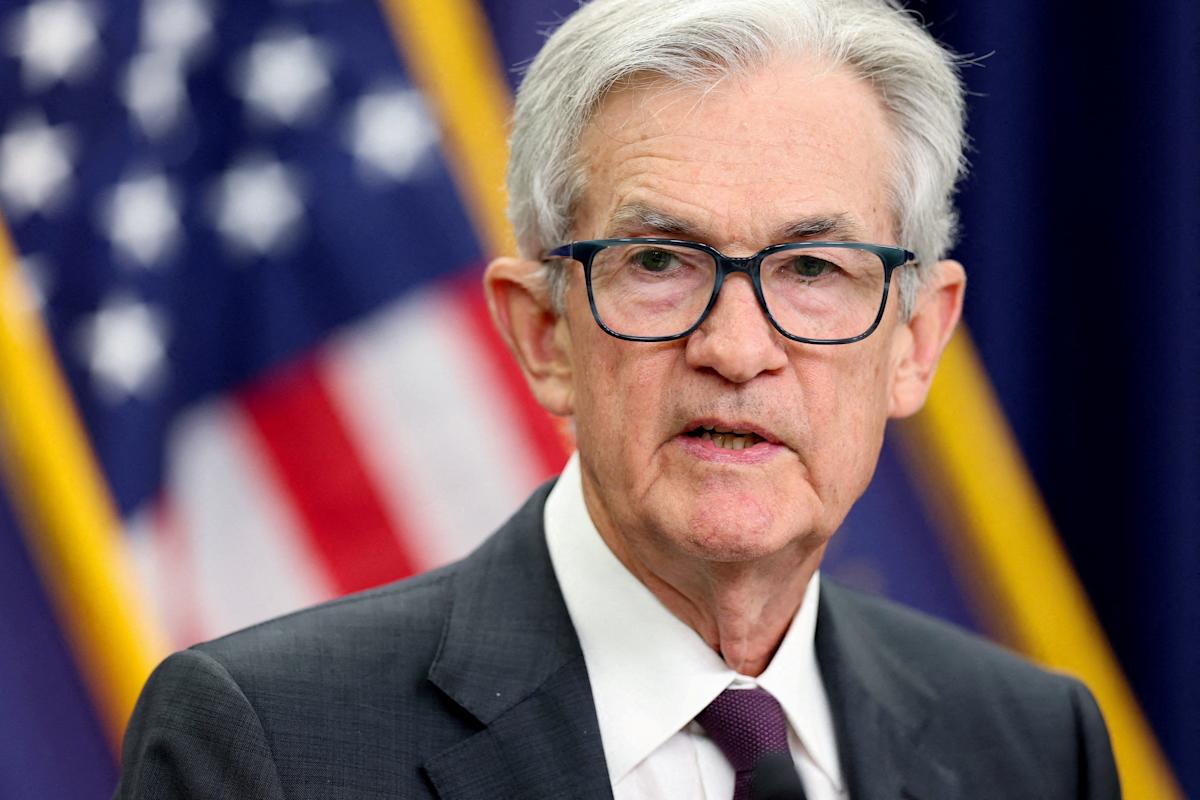
Federal Reserve Chair Jerome Powell speaks during a press conference following the issuance of the Federal Open Market Committee’s statement on interest rate policy in Washington, D.C. on July 30, 2025.
The Fed is tasked with maintaining maximum employment and low inflation.
When the labor market is weak, cutting interest rates can make borrowing costs cheaper for businesses and consumers, which can juice the economy and promote hiring. When consumer prices are surging, the central bank can raise rates to cool economic activity and ease inflation.
The dilemma the Fed has faced this year is that tariffs are expected to both curb growth and raise consumer prices, leaving the central bank torn between its dual mandate.
The U.S. economy added just 22,000 jobs in August as companies grapple with new trade, immigration and federal layoff policies, according to Bureau of Labor Statistics data. The unemployment rate rose to the highest level since October 2021, and revisions revealed the U.S. shed 13,000 jobs in June, the first month of job losses since December 2020.
The findings follow a disappointing July report that revealed a dramatic downward revision for employment gains in May and June. Powell signaled that the Fed was open to rate cuts shortly after the report was released.
Another report from the Bureau of Labor Statistics published Sept. 9 showed firms hired nearly a million fewer workers than previously estimated in the 12-month period ending in March, offering the Fed yet another reason to cut rates, according to a note from BMO Capital Markets senior economist Sal Guatieri.
While inflation remains above the Fed’s 2% target, August inflation numbers likely weren’t high enough to prevent the Fed from cutting rates.
Consumer prices accelerated modestly in August at 2.9%, according to the Labor Department, while core inflation ‒ which excludes more volatile categories like food and energy ‒ held steady at 3.1%.
A rise in jobless claims “overshadows the importance of the inflation report” and “underscores that the labor market is losing steam and reinforces that the Fed needs to start cutting rates,” Bostjancic said in a recent note, adding that September will likely be the start of a series of rate cuts.
The Fed has been reluctant to cut rates since late 2024, opting instead for a “wait-and-see” approach to parse out how Trump’s tariffs will impact consumer prices.
While Powell in August said tariffs’ effects on prices are “now clearly visible,” a “reasonable base case” is that they result in a one-time price bump with relatively short-lived effects. Meanwhile, he warned the downside risks to employment are rising.
“In the near term, risks to inflation are tilted to the upside, and risks to employment to the downside – a challenging situation,” he said during a speech in Jackson Hole, Wyoming. “When our goals are in tension like this, our framework calls for us to balance both sides of our dual mandate.”
Investors are betting on a rate cut this month, with CME’s FedWatch tool suggesting a roughly 92% chance for a 25 basis point cut ‒ or 0.25 percentage point ‒ and 8% chance for a 0.5 percentage point cut as of Friday. The Fed’s key interest rate is currently in the range of 4.25% to 4.5%.
Unless Fed officials believe the economy is heading into a recession without an aggressive rate cut in September, “the possibility of a 50 bp (basis point) cut in September may be off the table,” Raymond James Chief Economist Eugenio Aleman said in a note.
Some Fed officials may push for more aggressive cuts at the September meeting, according to a note from economist Michael Feroli of JP Morgan. Republican Fed Governors Christopher Waller and Michelle Bowman, who dissented for a cut in July, could dissent for a 0.5 percentage point cut. Stephen Miran, who appears to be on track to be confirmed by the Senate before the meeting, could also dissent for a larger cut, according to Feroli.
Deutsche Bank Research economist Matthew Luzzetti said there’s also a chance “a regional Fed president or two” vote for no change to the policy rate.
“This decision is unlikely to be unanimous,” Luzzetti said in a note. “Depending on the outcome, it could be the first meeting where three governors dissent since 1988 and the first with dissents on both sides since September 2019.”
Many economists expect a 0.25 percentage point cut in September, but there’s less clarity on how many cuts will follow.
Fed funds futures markets are betting on three rate cuts in 2025, while economists are split on whether the Fed will announce two or three reductions this year.
Overall, the median respondent in a recent Bloomberg survey anticipates two rate cuts before the end of the year, with economists divided on whether the second cut would take place in October or December. More than 40% of economists expect three.
It’s still unclear whether Fed Governor Lisa Cook will have a role in the central bank’s September meeting.
The Trump administration claims Cook committed mortgage fraud before joining the Fed, allowing the president to fire Cook “for cause.” Cook has denied wrongdoing and claims the firing was unlawful.
Trump’s unprecedented move to fire Cook – the first Black woman on the Fed’s board – has raised concerns over the central bank’s independence from politics. Trump has demanded the Fed make aggressive rate cuts, and in August said he was expecting to soon have a majority of appointees on its board who would lower interest rates.
Cook’s lawyer, Abbe Lowell, argued that firing Cook “would endanger the stability of our financial system and undermine the rule of law.”
The Justice Department has asked an appeals court to pause the order temporarily blocking Cook’s removal and requested a decision by the end of the Sept. 15 business day, right before the two-day Fed meeting kicks off on Sept. 16.