To sell or not to sell.
That’s the major dilemma founders around the world face: Once they’ve started to get big enough to attract the attention of buyers, they face the decision of whether to cash out now, or use the compliment as fuel to go even bigger.
While it may seem like a no-brainer to say yes to an acquisition to the tune of millions—or even billions—it can be hard to later rest easy thinking about how much more you could have made independently.
There may be no better recent case study than Mark Zuckerberg. In 2006, he received massive offers—$750 million from Viacom and $900 million from Yahoo—to buy out Facebook. But, as a 22-year-old, he was bullish that he still had plenty of runway left.
“We’re focused on building the company for the long term,” Zuckerberg said at the time. Today, the social platform now known as Meta is worth just over $1.9 trillion—a 2,100x increase over two decades. And Zuckerberg’s own wealth has ballooned to over $260 billion, according to the Bloomberg Billionaire Index.
Years later, Facebook began to make its own acquisitions; notably offering to buy Snapchat for $3 billion in 2013. But, Snap founder Evan Spiegel resisted, and today, the photo social platform is worth $12 billion.
Of course, in both of these instances, the founders are now members of the ultrawealthy and made far more by waiting versus selling out early. However, this isn’t the reality for everyone.
When YouTube’s first-ever video—”Meet me at the zoo”—went live in 2005, no one could have expected that the video platform would explode onto the internet.
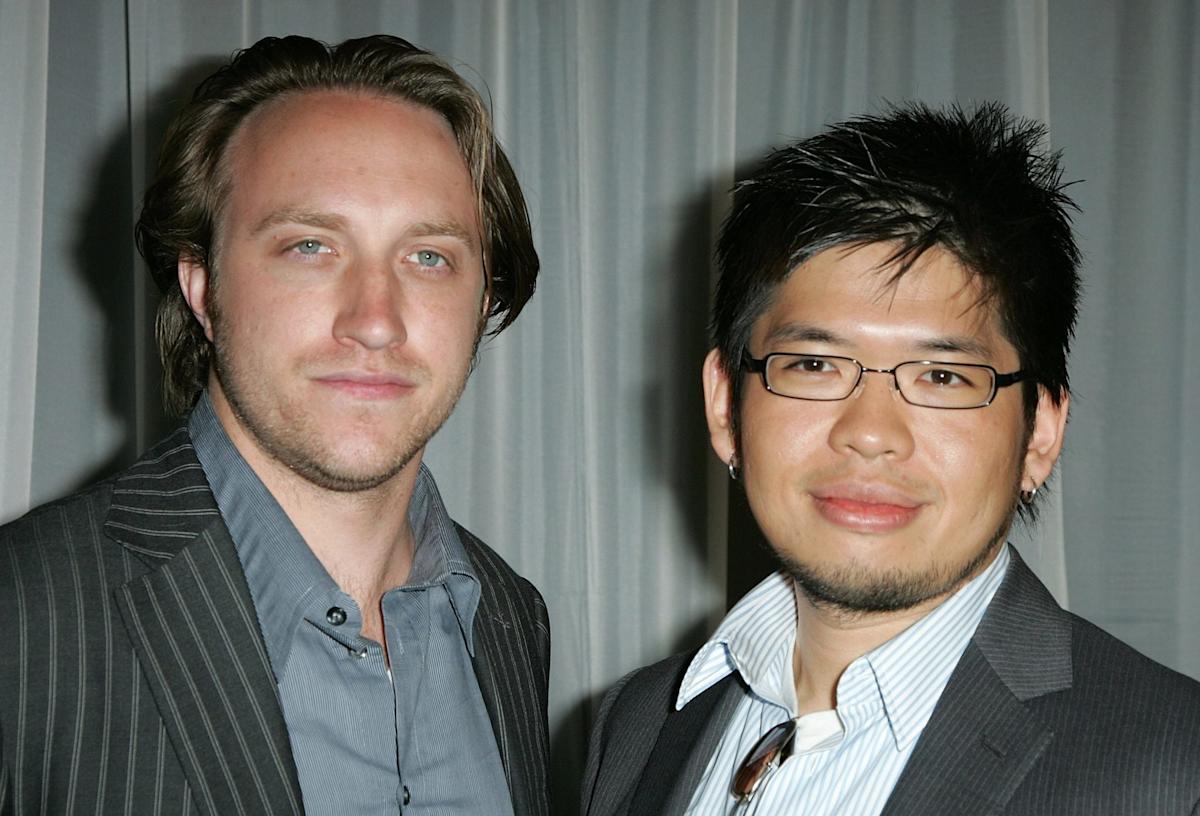
The growth was so substantial that just over a year after founding, cofounders Chad Hurley, Steven Chen and Jawed Karim decided that Google’s $1.65 billion offer was too good to resist.
“This is great,” Hurley said in a video posted when the sale was in fall 2006. “Two kings have gotten together. The king of search, the king of video have gotten together. We’re going to have it our way.”
Hurley, YouTube’s then-CEO, received shares worth about $345 million by the time the Securities and Exchange Commission documents were released a few months later, according to The New York Times. Chen, YouTube’s then-CTO, received about $326 million in shares; and Jawed Karim, who left the venture early to go back to school, got $64 million.
While the sale made them financially secure for life and cemented their status as tech pioneers, it was just a fraction of the $550 billion that YouTube is valued at today, a 333x increase (unadjusted for inflation). For Hurley and Chen, their current slice could be worth some $100 billion each.
After walking out of his LSAT exam 20 minutes in and heading to a Waffle House, Alexis Ohanian decided he wanted to become an entrepreneur. And after meeting Steve Huffman as students at the University of Virginia and later joining forces with Aaron Schwartz, the foundations for Reddit were created in 2005.
Within a year and a half, the social platform exploded to over 70,000 daily unique visitors, and buyers came knocking. But instead of holding out, the cofounders, who were in their early 20s, couldn’t resist the $10 million offer from Conde Nast. Plus, Ohanian’s life was a bit in shambles: his girlfriend at the time was in a coma, his dog died, and his mom was diagnosed with terminal brain cancer.
“As a first-time CEO fresh out of college, you’re feeling invulnerable, feeling really good about building this business,” Ohanian told Wired last month. “And then all of these things happen. And in particular when my mom was diagnosed, it really framed mortality for me in a new way.”
Flash forward to today, Reddit is now worth over $45 billion after going public earlier this year. The founders could be sharing a pie over 4,500x the size of the original sale. In fact, Ohanian would even surpass his wife, Serena Williams, with her $350 million net worth.
Instagram exploded on the social media stage in late 2010, with 1 million users registering within just two months of its creation, and buyers soon started expressing interest in the photo-sharing app.
In April 2012, Facebook announced it was purchasing Instagram for about $1 billion in cash and stock. It left cofounder Kevin Systrom, then 28, with about $400 million and Mike Krieger, then 25, with about $100 million; the rest was divided between investors and Instagram’s 11 other employees.
And while the payday was substantial, it was not as rewarding for the cofounders as they anticipated.
“I think the biggest lesson … coming into a fair amount of money pretty quickly, was that money itself is no end. It doesn’t make you happy. It doesn’t solve health problems. It can help in those things,” Systrom said at SXSW in 2019.
The cofounders decided to sell in part because Zuckerberg allowed them to stay at Instagram; Systrom remained as CEO and Krieger CTO until 2018. However, it also gave them a first-hand view into the wealth they could have made alone, with the photo-app soaring to a $100 billion valuation. Today, it is worth about $114 billion, according to Kantar—meaning each of the cofounders’ net worths would be well into the multi-billions.
Krieger now serves AI firm Anthropic’s product chief, whereas Systrom has not updated his LinkedIn after serving as CEO of Artifact, an AI-driven news aggregation platform the duo founded after leaving Facebook. Artifact was purchased by Yahoo in 2024 for an undisclosed amount.
There’s no question that in each of these cases, the acquisition had a positive impact on each company’s overall success. And while the founders of YouTube, Reddit, or Instagram may have missed out on billions more in wealth (Systrom, for example, has billionaire status today), their early sell provided security, resources, and freedom that they otherwise might have never received.
It remains a nearly impossible game to predict if the startups could have scaled on par without their new corporate parent. But ultimately, these examples underscore just how the decision to sell can be one of the toughest—and most impactful—an entrepreneur may ever make.
Did you sell your company early, or did one major decision completely change the course of your career?Email your story to preston.fore@fortune.com.
This story was originally featured on Fortune.com