Brew City is also home to Harley — and America’s hottest housing market
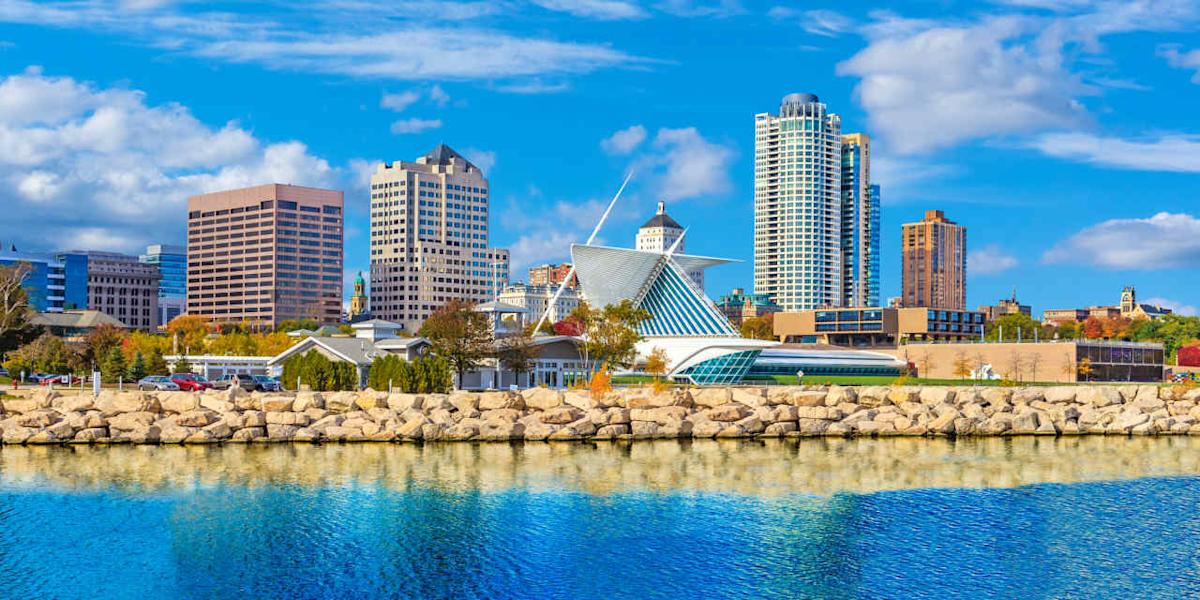
Nationally, homes took an average of 60 days to sell in August. But in some local markets, like Milwaukee, they’re selling in half that time. – Getty Images/iStockphoto
The national housing market may be depressed, but homes are still selling fast in some metro areas — and these places all have one thing in common.
Sales nationally have been stagnant as high home prices and mortgage rates have priced out many buyers. Real-estate markets that were pandemic-era favorites, such as Miami and Austin, Texas, have seen home sales crater as demand has dried up.
Yet some housing markets are still seeing strong interest from buyers. These active markets share one characteristic: They’re places where home prices are still relatively affordable — for now.
The varied amount of time listings spend on the market highlights a sharp divide across the country five years since the pandemic began. While sellers had control of local housing markets during the pandemic era of low interest rates, buyers have taken over completely in places where supply has become abundant.
Following are the metro areas in America where homes are selling the fastest, and the slowest.
In August 2025, the metro area where homes spent the fewest days on the market was Milwaukee-Waukesha, in Wisconsin, according to data Realtor.com provided to MarketWatch.
The company looked at the pace of sales in the 50 largest metro areas in the U.S. Milwaukee-Waukesha–area homes were listed for a median of 32 days on the market before they were sold to a buyer.
The pace of sales in the Milwaukee area is now running hotter than it was before the pandemic. In August 2019, homes in Milwaukee-Waukesha spent a median of 39 days on the market. The median list price of a home for sale in the metro is about $400,000 today.
That’s affordable, in relative terms. Nationally, the median price of an existing home hit an all-time high of $435,300 in June, according to the National Association of Realtors.
On the shores of Lake Michigan, less than 100 miles north of Chicago, Milwaukee is known for breweries, and it’s also corporate home base for the Harley-Davidson HOG motorcycle company and a Harley-Davidson museum, along with financial-services companies Northwestern Mutual and Fiserv FI; staffing operator Manpower MAN; Milwaukee Tool; and industrial conglomerate Johnson Controls JCI, though the latter redomiciled in Ireland a decade ago.
Western suburb Waukesha was dubbed a “guitar town” in 2012 as the birthplace of instrument innovator Les Paul. The city’s downtown features more than a dozen 10-foot-tall guitar sculptures.
The region hosts many festivals and “a lot of recreational stuff” to do in every season, including ski resorts and hiking and biking trails, David Didier, a Wisconsin-based broker and owner of Re/Max United, told MarketWatch. Buyers still want safe communities and good schools, he said, but they also want to live in places where they can enjoy activities.
“Milwaukee’s real-estate market is red-hot in 2025, driven by its rare combination of affordability, growing job opportunities and a high quality of life,” Kristy Robbins, a local real-estate agent with Coldwell Banker Realty, told MarketWatch.
“With the cost of living still relatively low compared to bigger cities, Milwaukee offers more space for the price, making it an ideal destination for those looking to maximize their investment,” she added.
So why is the Milwaukee area so hot right now when the national market is so depressed? Unlike markets in the South, supply is still tight in Milwaukee-Waukesha, while demand remains relatively strong, Didier said. His agents work with both buyers and sellers in Milwaukee and Waukesha.
Entry-level homes in the suburbs priced around $300,000 are still getting multiple offers from buyers within the first couple of days on the market, with many offering more than the list price. That’s in contrast to other southern markets, where price cuts are commonplace.
Supply in the Milwaukee area is constrained in part because many sellers are reluctant to put their house on the market as the lock-in effect is still largely in place. People who are looking to move up from a starter home are seeing current prices and mortgage rates as prohibitive, Didier said. “And that leads to less inventory, causing prices to go up even higher,” he added. Still, Milwaukee-area home prices are below the national average.
Who’s buying? First-time buyers and empty nesters are the most active in the Milwaukee-Waukesha market. Most of the empty nesters are paying cash, Didier said.
Some of the other fast-selling housing markets are also considered relatively affordable. Second and third place on Realtor.com’s list went to the Buffalo-Cheektowaga, N.Y., metro area, and Chicago-Naperville-Elgin, which spans the Illinois-Indiana state line near the shore of Lake Michigan.
Homes in Buffalo-Cheektowaga sold in just 37 days in August, which was two days quicker than in August 2019. The typical home nationally spent nearly double that amount of time — 60 days — on the market in August. The median list price in August in the Buffalo-Cheektowaga area was $285,450.
Homes in Chicago-Naperville-Elgin sold 11 days quicker this August, as compared with the same month in 2019. The median list price was $374,900.
People have generally been moving across the country less. But over the course of 2025, the Midwest has seen an inflow of people migrating to cities such as state capitals Indianapolis and Columbus, Ohio, according to a September report by the Bank of America Institute.
These are the 10 most-active housing markets in America, based on the number of days home listings spent on the market in August:
On the flip side, pandemic favorites have largely fallen out of favor with home buyers. Supply has outpaced demand, with sellers struggling to find buyers for their properties.
These are the 10 least-active housing markets in America, based on the number of days home listings spent on the market:
Metro areaMedian list priceDays on the market
Miami-Fort Lauderdale-West Palm Beach, Fla.
$500,000
90
Orlando-Kissimmee-Sanford, Fla.
$422,695
77
Tampa-St. Petersburg-Clearwater, Fla.
$415,000
77
Jacksonville, Fla.
$399,000
74
Austin-Round Rock-San Marcos, Texas
$499,000
72
Phoenix-Mesa-Chandler, Ariz.
$499,000
70
San Antonio-New Braunfels, Texas
$330,000
68
Riverside-San Bernardino-Ontario, Calif.
$599,000
66
Memphis, Tenn.-Miss.-Ark.
$332,995
64
Tucson, Ariz.
$384,995
64
The highest levels of supply were found in the metro areas above, led by Miami, Realtor.com’s data showed.
As listings languish on these markets, some sellers are trying to regain control by yanking houses off the market. “Delistings have become a defining feature of this summer’s housing market,” the company said.
In July, the most recent month for which delisting data are available, delistings rose 57% from the same month a year ago. That figure represented a “sharp upward trend,” Realtor.com said.
Unsurprisingly, Miami led the top 50 metros in delistings. For every 100 new listings that come to the Miami market, 57 were removed without selling in July, Realtor.com said. The second-highest ratio was in Phoenix, where for every 100 new listings that popped up in the Arizona city, 45 were removed from the market.
The delisting trend “suggests that sellers are increasingly unwilling to accept current market prices or conditions, pulling their homes from the market instead,” Realtor.com said.